

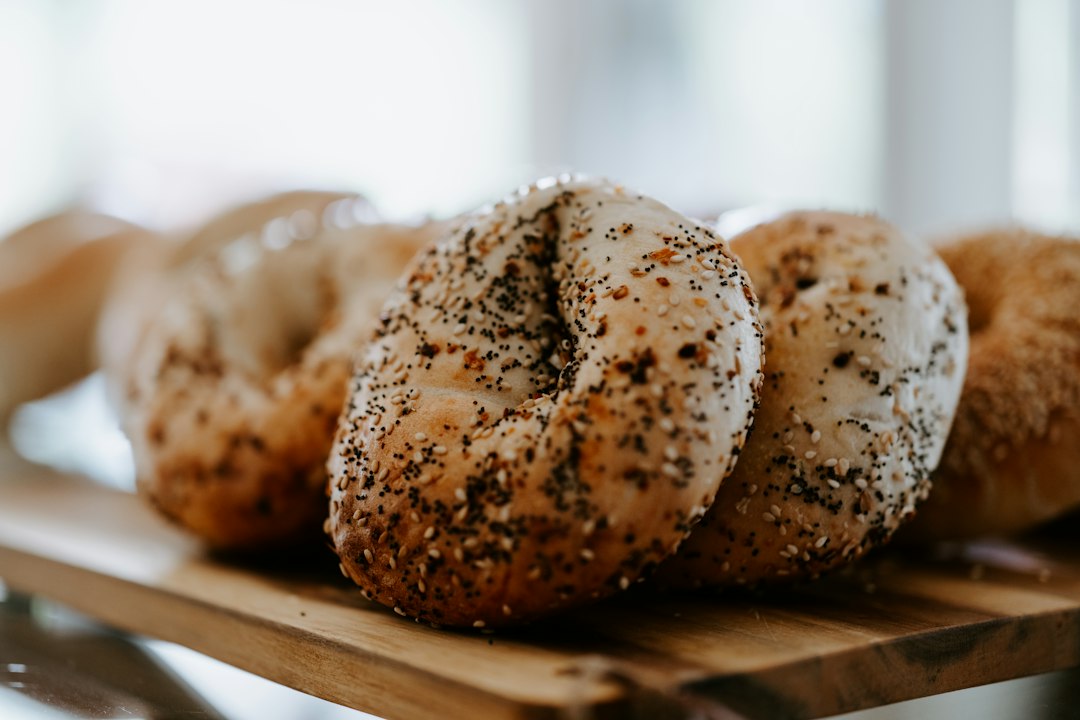
Montreal Bagels: A Complete Guide to the City’s Famous Wood-Fired Bagel
Few foods are as tied to Montreal’s identity as the bagel. Smaller, denser and sweeter than the bagels most North Americans know, the Montreal-style bagel is hand-rolled, boiled in honey-sweetened water and baked in a wood-fired oven. For many locals, a warm sesame bagel straight from the bakery bag is the best breakfast in the city, and for visitors it is one of the easiest and most affordable food experiences to try.
This guide explains what makes Montreal bagels unique, introduces the two historic bakeries at the heart of the tradition and shares practical tips for ordering, eating and taking bagels home.
Key takeaways
- Montreal bagels are smaller, thinner, sweeter and denser than New York bagels, with a larger hole.
- The dough contains malt and egg but no salt, and the bagels are boiled in honey-sweetened water before baking.
- They are traditionally baked in wood-fired ovens.
- Fairmount Bagel (founded in 1919) and St-Viateur Bagel (founded in 1957), both in the Mile End neighbourhood, are the city’s two most famous bakeries.
- Sesame (“white seed”) and poppy (“black seed”) are the classic flavours.
What makes a Montreal bagel different?
Both styles share the same basic idea: a ring of yeast dough boiled before baking, which gives the crust its shine and chew. After that, the differences are clear as soon as you take a bite.
| Feature | Montreal-style bagel | New York-style bagel |
|---|---|---|
| Size and shape | Smaller and thinner, with a larger hole | Larger and puffier, with a smaller hole |
| Texture | Dense, chewy, with a crisp crust | Softer, breadier interior |
| Dough | Contains malt and egg, no salt | Typically contains salt |
| Boiling water | Sweetened with honey | Often plain water, sometimes with malt |
| Oven | Wood-fired | Usually conventional deck or rack ovens |
| Taste | Slightly sweet, smoky edges | More neutral and savoury |
The wood-fired oven is a big part of the character. The intense, uneven heat gives each bagel its own colour, with darker blistered spots and a faint smokiness that you will not find in a bagel baked in a standard oven.
A short history of the Montreal bagel
Bagels came to Montreal with Jewish immigrants from Eastern Europe in the early twentieth century, many of whom settled around the Main (Saint-Laurent Boulevard) and the neighbourhoods north of it. Bakeries opened to serve the community, and over the decades the bagel became a food shared by the whole city.
Two bakeries became the symbols of that tradition. Fairmount Bagel dates back to 1919 and St-Viateur Bagel was founded in 1957. Both are still operating a few blocks apart in Mile End, and both claim a special place in the city’s bagel history. Locals have argued for generations about which is better, a friendly rivalry that has become part of Montreal folklore.
The Montreal bagel has even travelled to space. In 2008, astronaut Gregory Chamitoff, who grew up in Montreal, brought bags of sesame bagels with him on his trip to the International Space Station.
Fairmount vs St-Viateur: the great debate
Fairmount Bagel
Located on Fairmount Avenue West, Fairmount is known for a wide range of flavours beyond the classics, from cinnamon raisin to more unusual varieties, alongside its traditional sesame and poppy seed bagels. The small shop is mostly a counter where you watch bakers roll, boil and slide bagels into the oven before buying them by the bag.
St-Viateur Bagel
St-Viateur’s original bakery on St-Viateur Street West is famous for its sesame bagels and the steady stream of customers coming in for a hot dozen. Over the years, the brand has also opened cafés in other parts of the city where you can sit down for a bagel sandwich.
Which one should you try?
Both. They are a short walk apart, so the best way to settle the debate is to buy a sesame bagel at each and compare them while they are still warm. Differences in sweetness, crust and density are subtle but real, and everyone ends up with an opinion.
How to order like a local
- Know the lingo. “White seed” means sesame and “black seed” means poppy. Plain bagels are also available.
- Buy by the half-dozen or dozen. Locals rarely buy just one. Bagels are sold in paper bags and are best eaten within hours.
- Eat one warm, on the spot. A fresh bagel needs nothing at all. Many people eat the first one on the sidewalk outside the bakery.
- Grab spreads separately. The classic bakeries focus on bagels; cream cheese and other toppings are usually sold pre-packaged, if at all. For a full sandwich, head to a café or deli.
- Bring a payment option. Check the bakery’s current payment methods and hours before you go, as they can change.
Classic ways to eat a Montreal bagel
- Plain and warm: the purist’s choice and the best way to taste the wood-fired crust.
- Cream cheese and smoked salmon: a deli classic, often with capers and red onion.
- Toasted with butter: ideal for day-old bagels.
- Bagel sandwich: eggs, cheese or deli meats at a café.
- Weekend brunch: many Montreal brunch spots serve bagel plates. See our guide to brunch in Montreal for ideas.
Planning your bagel walk in Mile End
Mile End is a lively neighbourhood of cafés, bakeries, record shops and murals, and the two historic bakeries make an easy starting point for a morning walk. A simple plan:
- Start at one bakery and buy a warm sesame bagel.
- Walk to the other and buy the same flavour to compare.
- Continue exploring the cafés and shops of Mile End and the Plateau.
- Finish with a visit to Jean-Talon Market, a short metro or bike ride north. Our Little Italy and Jean-Talon guide has the details.
Bagels also make a perfect budget meal. For more inexpensive options around the city, see our list of cheap eats in Montreal.
Practical tips for visiting the bagel bakeries
- Expect a line on weekends. Saturday and Sunday mornings are especially busy with locals stocking up and visitors taking photos. Lines usually move quickly because the menu is simple.
- Watch the bakers at work. In the classic shops, the rolling table, the boiling pot and the wood-fired oven are often in full view behind the counter. It is part of the experience, so take a moment before you order.
- Be respectful with photos. The bakers are working in a hot, busy space. Step aside from the counter once you have your bag so others can order.
- Know what you want before you reach the counter. Decide on the flavour and quantity while you wait; it keeps the line moving.
- Plan for a picnic. There is little or no seating at the traditional bakeries. On a nice day, take your bagels to a nearby park or a café that welcomes outside food.
- Combine with other Mile End stops. The neighbourhood is walkable and bike-friendly, so you can easily add coffee, pastries or shopping to your bagel run.
New to the city’s food scene? Our Montreal food guide covers the basics of eating out, from reservations to local customs.
How to keep Montreal bagels fresh
Because they contain no preservatives and are relatively small, Montreal bagels are at their best on the day they are baked. To keep them longer:
- Same day: keep them in the paper bag at room temperature.
- Next day: refresh them for a few minutes in a hot oven or slice and toast them.
- Longer: slice them while fresh, freeze them in a sealed bag and toast straight from the freezer.
- Avoid the fridge: refrigeration tends to make bread products stale faster.
Taking bagels home on a flight? Many visitors carry a bag or two. If you are travelling internationally, check the food rules of your destination country before you pack them.
Bagels and Montreal’s other iconic foods
Bagels share the spotlight with smoked meat, poutine and other dishes that define the local food scene. If you are building a food itinerary, our 10 dishes you have to try in Montreal and our list of must-try restaurants are good next stops.
Frequently asked questions
Why are Montreal bagels sweet?
The dough contains malt and egg, and the bagels are boiled in water sweetened with honey before baking. The result is a subtly sweet crust, especially noticeable when the bagels are fresh.
Is Fairmount or St-Viateur older?
Fairmount Bagel traces its history to 1919, while St-Viateur Bagel was founded in 1957. Both claim a central role in the city’s bagel tradition.
What is the most popular flavour?
Sesame, known locally as “white seed,” is the classic choice, followed by poppy seed, or “black seed.”
Do Montreal bagels contain salt?
Traditional Montreal-style bagel dough is made without salt, which is one of the main differences from New York-style bagels.
Are Montreal bagels vegan?
Traditional Montreal-style bagel dough contains egg, so classic Montreal bagels are generally not vegan. If you follow a plant-based diet, ask the bakery about its recipe, and see our vegetarian and vegan dining guide for other options.
Can I find Montreal-style bagels outside Mile End?
Yes. Bakeries and cafés across the city sell Montreal-style bagels, and some grocery stores carry bags from well-known bakeries. For the full experience, though, nothing beats a bagel pulled from a wood-fired oven in Mile End.
Conclusion
The Montreal bagel is simple food with a long story: hand-rolled dough, honey-sweetened water, a wood-fired oven and more than a century of tradition in Mile End. Try a warm sesame bagel at both Fairmount and St-Viateur, decide which side of the debate you are on, and take a bag home for tomorrow’s breakfast. For more ideas on where to eat next, browse our neighbourhood-by-neighbourhood guide to eating in Montreal.